

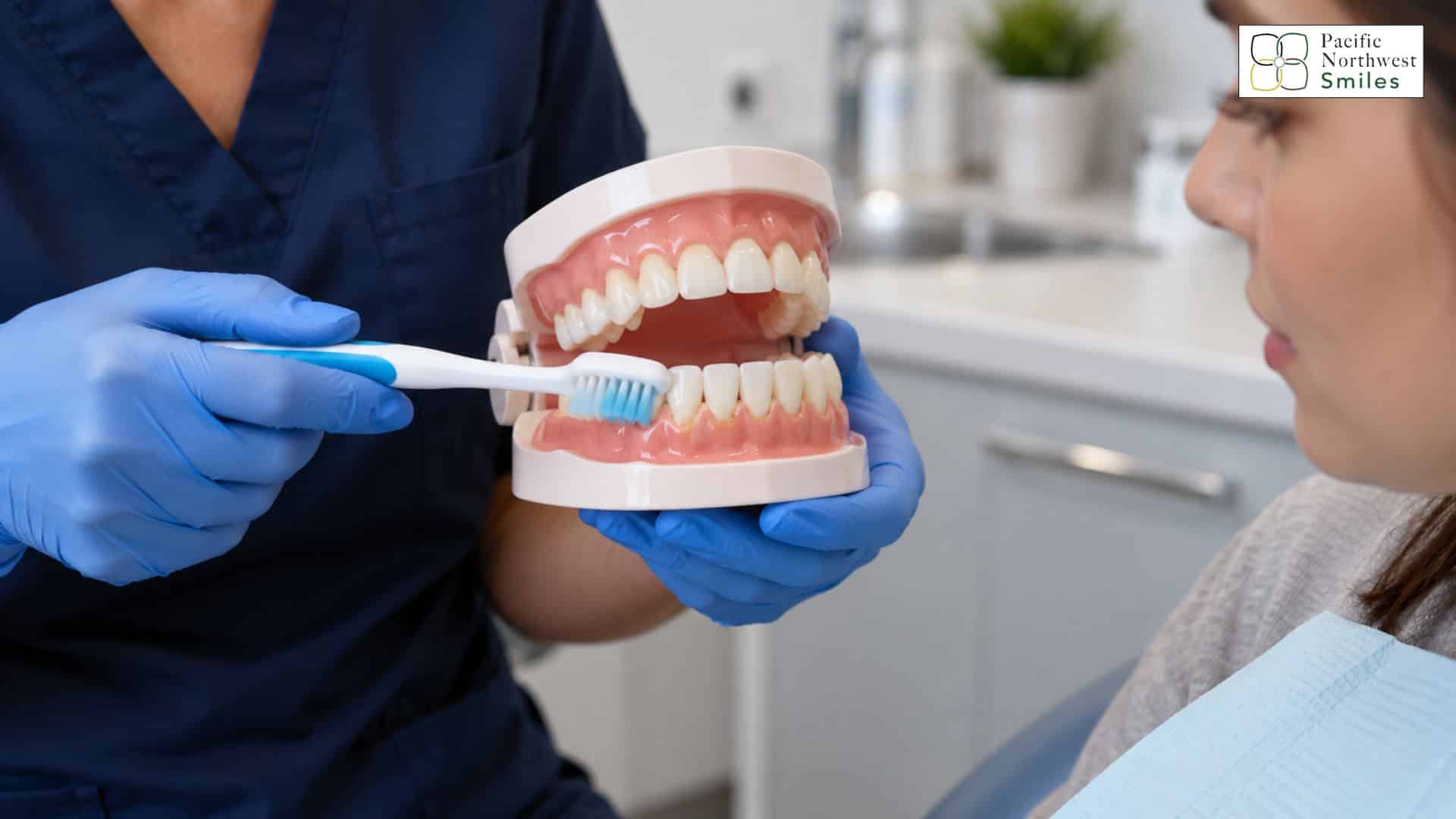
Plaque is a soft, sticky film of bacteria that brushing and cleaning between your teeth help remove. Tartar, also called calculus, is plaque that has hardened through mineral buildup. Once tartar forms, brushing and flossing cannot remove it.
That explains why a rough deposit may remain even when you brush regularly. Daily cleaning controls new plaque, while hardened deposits require professional removal.
- Plaque is soft; tartar is hardened, mineralized plaque.
- Brushing and cleaning between teeth work together to control plaque.
- Brushing harder or scraping your teeth is not a safe way to remove tartar.
- The type of professional cleaning you need depends on your gum health.
What Is the Difference Between Plaque and Tartar?
Plaque continually forms on teeth. When it is not removed, some of it can harden into tartar, creating deposits that are difficult to keep clean.
| Feature | Plaque | Tartar |
| Texture | Soft, sticky film | Hard deposit |
| How it develops | Bacteria accumulate on oral surfaces | Plaque becomes mineralized |
| Removal | Daily brushing and interdental cleaning | Professional dental instruments |
| Home-care goal | Disrupt and remove it regularly | Reduce new buildup after professional removal |
Dental Work Still Needs Daily Cleaning
Crowns, bridges, and implant restorations also collect plaque. Pay particular attention to their edges and the surrounding gumline.
The right cleaning method depends on the restoration. For example, cleaning beneath a bridge requires a different approach from flossing between two separate teeth. Removable dentures also need their own cleaning routine.
Ask your dental team to demonstrate how to reach these areas rather than assuming your usual technique covers every surface.
A Rough Spot Is Not Always Tartar
A rough area could be a hardened deposit, a chipped tooth, or an uneven filling or crown. Texture alone cannot identify the cause.
If the spot persists, an examination through general dentistry care can help determine what is present. Avoid trying to scrape it away with fingernails, metal tools, or home dental scalers.
Why Can Plaque Remain Even If You Brush Every Day?
Brushing regularly matters, but coverage and technique matter too. Toothbrush bristles do not fully clean between teeth, and some areas are easier to miss than others.
The ADA recommends brushing for two minutes twice daily with fluoride toothpaste and cleaning between teeth once a day.
Clean Between Teeth as Well as Around Them
Floss or another suitable interdental cleaner helps reach spaces that brushing misses.
Depending on your teeth, dexterity, and dental work, options may include:
- Dental floss or floss holders
- Interdental brushes
- Water flossers
- Specialized tools for bridges or other restorations
Ask which tool fits your particular spaces and how to use it without forcing it against the gums.
Focus on Coverage Instead of Pressure
Brushing harder will not remove hardened tartar. Use a soft-bristled brush and gentle movements.
For a manual toothbrush, a common technique is to angle the bristles toward the gumline and use short strokes. Clean the outer, inner, and chewing surfaces, including the inside surfaces of the front teeth.
If you are considering a different brush, our article about using an electric toothbrush discusses features such as timers. Regardless of the brush you choose, it cannot remove established tartar.
Make the Routine Manageable
Tell your hygienist if cleaning is difficult because of tight contacts, limited hand movement, or dental work.
Ask for a demonstration in the area you struggle with. It may be more useful to practice cleaning one difficult space correctly than to leave with several unfamiliar products and no clear instructions.
When Does Plaque or Tartar Need Professional Dental Care?
Hardened tartar requires professional removal. Arrange an assessment if you notice persistent bleeding, redness, swelling, bad breath, gum recession, or discomfort when chewing. A loose adult tooth also needs prompt dental attention.
Pacific Northwest Smiles offers professional cleanings and home-care guidance through its preventive dentistry services in Mill Creek.
Your Gum Health Determines the Cleaning Needed
Visible tartar does not automatically mean you need scaling and root planing, often called a deep cleaning.
The dentist or hygienist considers the condition of your gums, pocket measurements, bleeding, and supporting bone. These findings help determine whether routine cleaning or periodontal treatment is appropriate.
Ask what the examination showed and why the recommended cleaning suits those findings.
Having a Persistent Deposit Examined by Dr. Greenhalgh
A spot that repeatedly catches your tongue deserves more than an assumption that you have missed it while brushing.
Dr. Darren Greenhalgh practices general and cosmetic dentistry at Pacific Northwest Smiles and earned his Doctor of Dental Surgery degree from Case Western Reserve University.
When describing the area, mention whether it is near existing dental work, feels newly rough, or catches floss. Those details help direct the examination toward the deposit, tooth surface, or restoration involved.
Turn Your Cleaning Into Practical Home-Care Guidance
Ask your hygienist to identify the areas where buildup is most noticeable.
Useful questions include:
- Which surfaces am I missing?
- Can you show me the brushing angle for this area?
- What should I use beneath this bridge?
- Does this interdental brush fit correctly?
- When should my gums be checked again?
Before leaving, try explaining the recommended change in your own words. This gives the team an opportunity to clarify anything uncertain.
An Optional Look at Patient Communication
Clear instructions are part of a useful dental visit. For readers curious about how dental teams approach patient experience, the Dental Marketing Secrets Podcast offers a practice-management perspective on communication and related topics.
The podcast is primarily for dental professionals and practice owners. Its discussions provide background on running a dental practice; the plaque-removal and gum-care recommendations in this article should be understood as clinical topics to discuss with your dental team.
Frequently Asked Questions
Can Brushing Harder Remove Tartar?
No. A toothbrush cannot remove established tartar. Continue gentle daily cleaning and arrange professional removal rather than increasing pressure or scraping the deposit yourself.
How Quickly Does Plaque Become Tartar?
The rate varies. Consistent daily plaque removal is more useful than trying to calculate a safe amount of time to leave it on your teeth.
Does Tartar Mean I Have Gum Disease?
Tartar can contribute to gum inflammation, but it does not establish a diagnosis by itself. Your dentist evaluates your gums and supporting tissues to determine whether disease is present.
Does Tartar Always Mean I Need a Deep Cleaning?
No. The recommendation depends on your periodontal findings. Our explanation of scaling and root planing provides background on treatment used when deposits and disease affect areas below the gumline.
Can Tartar-Control Toothpaste Remove Existing Deposits?
No. Tartar-control toothpaste may help reduce future buildup, but it does not replace professional removal of hardened deposits.
Should I Stop Cleaning an Area If My Gums Bleed?
Do not abandon oral hygiene, but avoid forceful brushing or flossing. Ask your dental team to check persistent bleeding and demonstrate a comfortable technique.
If a rough deposit remains despite normal cleaning, contact Pacific Northwest Smiles in Mill Creek, WA. An examination can identify the cause and determine what care is appropriate