

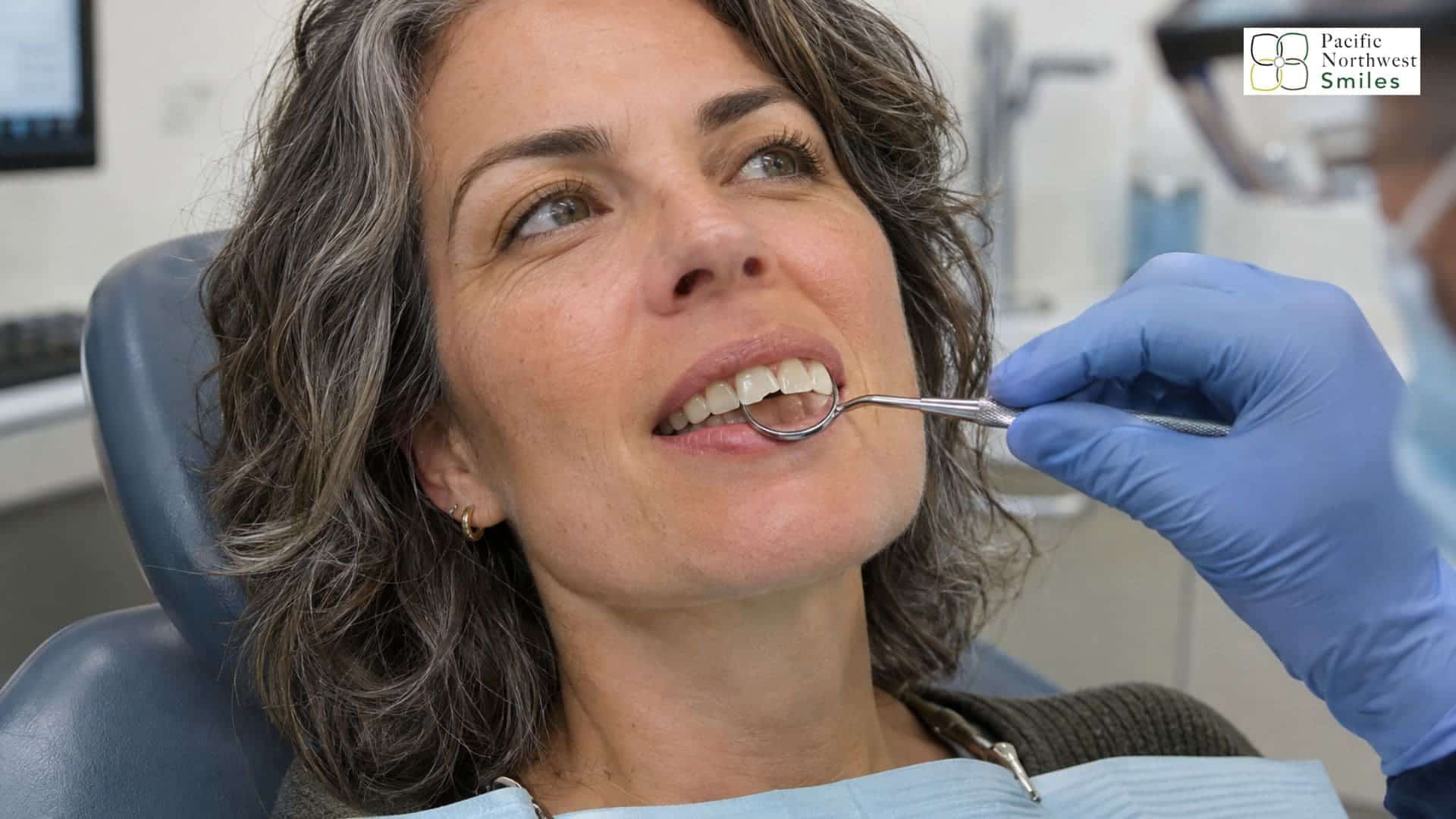
A chipped porcelain veneer can sometimes be repaired, while more extensive damage may require replacement. The decision depends on the chip’s size and location, the veneer’s attachment, the underlying tooth, and the forces placed on it when you bite.
A tiny surface defect may need a different approach from a large fracture or loose veneer. An examination helps determine how much damage is present and which option can restore acceptable appearance and function.
Key Takeaways
- Some minor defects may be polished or repaired.
- Larger fractures, poor fit, or underlying tooth problems may require replacement.
- A loose veneer needs assessment even if it looks intact.
- Avoid filing, gluing, or repairing the veneer yourself.
What Determines Whether a Chipped Veneer Can Be Repaired?
The dentist assesses the restoration and tooth together. The visible chip is only part of the decision.
Pacific Northwest Smiles provides porcelain veneer care in Mill Creek. When arranging an assessment, mention any sensitivity, looseness, or change in your bite.
The Size and Depth of the Damage
A small surface irregularity may sometimes be smoothed and polished. A localized chip may be suitable for repair with tooth-colored composite bonded to the remaining porcelain.
These approaches have limits. Repair material may differ from the original ceramic in appearance and wear, and a repair is not suitable for every fracture.
The dentist needs to check whether cracks extend beyond the missing piece and whether enough sound material remains.
The Location and Bite Forces
Damage at the biting edge may be exposed to repeated chewing forces. A defect near the veneer’s margin, where it meets the tooth, raises different questions about fit and the condition of the underlying surface.
If an area is receiving excessive force, addressing the visible chip alone may leave a contributing factor unresolved.
Tell your dentist if the damage followed an impact, biting a hard object, or a recent change in how your teeth meet.
Reviewing the Damaged Restoration With Dr. Greenhalgh
Dr. Darren Greenhalgh practices general and cosmetic dentistry at Pacific Northwest Smiles. His background includes teaching and lecturing on CEREC restorations.
For a damaged veneer, ask him to explain whether the concern is limited to the porcelain or also involves its bond, the tooth, or the bite. Understanding that distinction helps you assess why a limited repair or replacement is being discussed.
When Might a Porcelain Veneer Need Replacement?
Replacement may be appropriate when a limited repair cannot adequately restore the veneer’s fit, appearance, or function. A loose veneer also needs assessment, although looseness does not automatically mean it must be discarded.
Findings That May Favor Replacement
The dentist may discuss replacement if:
- A substantial portion has fractured
- Cracks compromise the remaining veneer
- Damage affects the restoration’s fit
- Decay or another tooth problem needs treatment
- A repair cannot achieve an acceptable result
The veneer’s age alone does not determine the decision. Our article on how long porcelain veneers last discusses longevity, while a new chip requires assessment of its current condition.
Can an Intact Veneer Be Reattached?
Sometimes. If the veneer comes off in one piece, place it in a small protective container and bring it to the appointment.
The dentist will examine the veneer, the tooth, and the reason it detached before deciding whether rebonding is appropriate.
Do not use household glue or attempt to force it back into position.
Questions to Ask Before Choosing Treatment
Ask:
- What makes this veneer suitable or unsuitable for repair?
- What appearance and durability limitations should I expect?
- Does the underlying tooth need treatment?
- Is there a contributing bite or grinding concern?
- What are the estimated costs and follow-up needs?
For readers interested in the communication side of these decisions, the Dental Marketing Secrets Podcast explores patient experience alongside dental marketing and practice management. It provides a practice perspective; your examination supplies the clinical basis for choosing treatment.
What Should You Do After a Veneer Chips?
Contact your dental office and describe what changed. Until the veneer is assessed, avoid biting hard foods with the affected tooth and do not repeatedly test whether it moves.
Protect the Area Without Altering It
Avoid filing, sanding, or scraping the porcelain. If an edge is cutting your tongue or lip, ask the office how to protect the area temporarily.
Continue gentle cleaning around the tooth. Keep any recovered fragment in a protective container, but do not assume it can be reused.
Report Symptoms That Affect Appointment Timing
Tell the office about:
- Significant or worsening pain
- New sensitivity
- A loose veneer
- A changed bite
- Swelling
- An injury to the tooth or mouth
Pain, swelling, or trauma may require faster attention than a small, painless chip. Pacific Northwest Smiles also offers restorative dentistry for damaged teeth if the examination identifies a problem beyond the veneer.
Bring a Brief Account of What Happened
Note when you first noticed the damage, what you were doing, and whether symptoms followed. A photograph taken when the chip appeared may help document changes.
After treatment, ask what precautions apply to the repaired or replaced veneer and when it should be checked again.
Frequently Asked Questions
Can a Tiny Chip Be Polished?
Sometimes. Polishing may be appropriate for a very small surface defect, provided it does not compromise the veneer’s shape or function. The dentist must assess the depth and location first.
Will a Chipped Veneer Keep Getting Worse?
It may remain unchanged or sustain further damage. Avoid stressing the affected tooth and have it examined. If you notice clenching or grinding, mention it; our article about night guards and grinding-related concerns provides background for that discussion. An appliance requires individual assessment.
Does a Chip Mean the Tooth Underneath Is Damaged?
No. Damage may be confined to the porcelain, but the underlying tooth and the veneer’s attachment still need checking.
If your veneer has chipped or loosened, contact Pacific Northwest Smiles in Mill Creek, WA. Describe the damage and any symptoms so the team can arrange an appropriate assessment.