

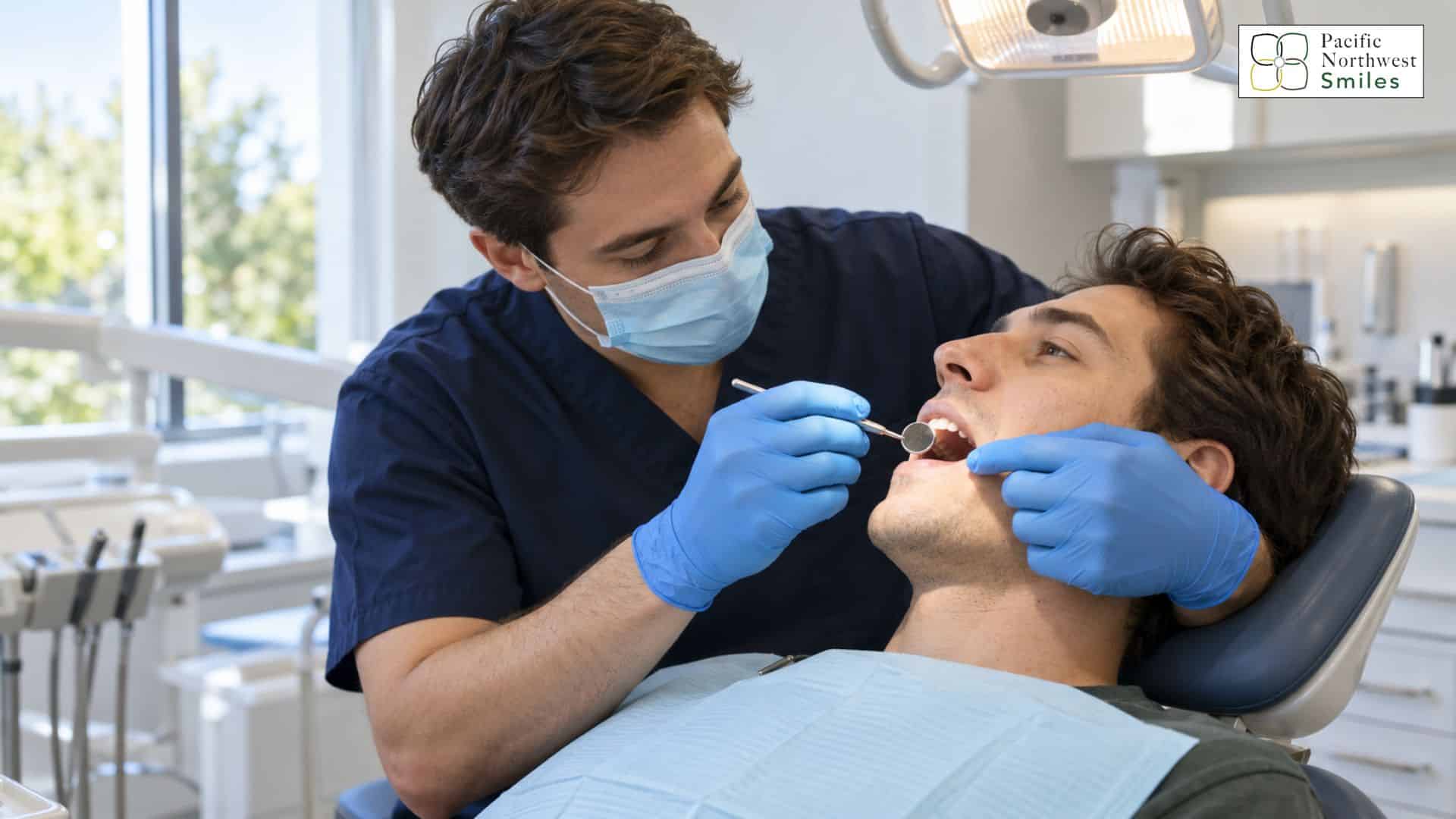
A new patient dental exam usually includes a review of your health history, a discussion of your concerns, and an examination of your teeth, gums, bite, and other oral tissues. Dental X-rays may be recommended when they provide information needed for diagnosis or treatment planning.
The visit establishes a starting point for your care. Before arriving, confirm whether your appointment includes a cleaning, imaging, and time to discuss treatment recommendations.
Key Takeaways
- Bring your medication list, health information, and questions.
- Previous dental records and usable X-rays can help your new dentist assess your needs.
- A cleaning may take place during the first visit or at a separate appointment.
- Leave knowing what the dentist found and what happens next.
What Should You Prepare Before Your First Dental Appointment?
Prepare information about your health, previous dental care, and current concerns. You do not need to remember every procedure or exact treatment date. Share what you know and identify any details you are unsure about.
Gather Your Health and Dental Information
Bring or prepare:
- Prescription medications, over-the-counter medicines, and supplements
- Known allergies and relevant medical conditions
- Information about previous dental treatment
- Contact details for your former dental office
- Dental insurance information, if applicable
- Notes about pain, sensitivity, bleeding, swelling, or other changes
Mention dental anxiety, previous difficult experiences, or communication preferences before the examination begins.
If you are returning to the dentist after several years, an approximate timeline is enough. Explain what would help you feel more comfortable during the visit.
Describe Your Main Concern
Choose one or two concerns you want addressed first. A specific description helps the dentist understand what you are experiencing.
For example:
“My lower-left tooth hurts when I chew, and it started about a week ago.”
Mention where the symptom occurs, when it began, what triggers it, and whether it is changing. Include swelling, bleeding, or pain that interrupts sleep.
You do not need to identify the cause yourself.
Ask About Transferring Previous Records
If another dental office recently took X-rays, ask whether those images and your treatment records can be transferred before the appointment.
Useful questions include:
- Which records should I request?
- How should my previous office send them?
- Have the records arrived?
Your dentist will determine whether existing images provide enough current information. Additional imaging may still be needed based on your symptoms and examination findings.
What Does the Dentist Check During a New Patient Exam?
The dentist evaluates your teeth, gums, existing dental work, bite, and oral tissues. Your health history and symptoms help guide the examination.
At Pacific Northwest Smiles, general dentistry in Mill Creek includes regular examinations, oral-health records, and discussions about your dental goals.
Teeth, Bite, and Existing Dental Work
The dentist checks for concerns such as tooth decay, cracks, worn surfaces, and damaged fillings or crowns. They may also assess how your teeth meet when you bite.
Tell the dentist if:
- A tooth hurts when you bite
- Hot or cold foods cause sensitivity
- A filling or crown feels loose
- A rough edge has appeared
- Food repeatedly catches in one area
- Your bite feels different
Some findings require further testing before the dentist can explain their cause or recommend treatment.
Gums and Supporting Tissues
The dentist or hygienist may check for inflammation, bleeding, gum recession, and tartar buildup.
A small periodontal probe may be used to measure the spaces between your teeth and gums. You may hear measurements being called out during this assessment.
These measurements are considered alongside other findings, including bleeding and bone levels. A single number does not explain your overall gum health.
Mouth, Tongue, and Surrounding Tissues
The examination extends beyond your teeth. The dentist may check your lips, cheeks, tongue, roof and floor of the mouth, and other accessible tissues. They may also assess your jaw and feel around your jaw and neck.
Mention any sore, patch, lump, numbness, or other unusual change at the start of the visit. Explain how long it has been present and whether it has changed.
X-Rays When Clinically Needed
Dental X-rays can reveal information that is not visible during an examination, including certain cavities, bone changes, and impacted teeth.
Being a new patient does not automatically mean you need every type of dental image. Imaging decisions should reflect your medical and dental histories, previous usable images, clinical findings, and individual needs.
If an X-ray or scan is recommended, ask:
- What are you looking for?
- Can my previous images provide that information?
- How will the image help guide my care?
Discussing Your Dental Health With Dr. Greenhalgh
Dr. Darren Greenhalgh earned his Doctor of Dental Surgery degree from Case Western Reserve University and practices general and cosmetic dentistry at Pacific Northwest Smiles.
For your first examination, prepare questions about current symptoms, previous dental work, and any changes you have noticed. These details give your dentist context when evaluating your mouth and discussing recommendations. You do not need to arrive knowing which treatment you need.
What Happens After the Dental Examination?
After the examination, the dentist explains the findings and recommends next steps. These may include preventive care, a cleaning, treatment, monitoring, or further assessment.
The discussion should help you understand which findings need attention and how to proceed.
Review the Findings and Priorities
If several concerns are identified, ask the dentist to explain them one at a time.
| Topic | Question to Ask |
|---|---|
| Findings | What did you find, and can you show me? |
| Recommendation | Why are you recommending this treatment? |
| Timing | How soon does it need attention? |
| Alternatives | What other options may be appropriate? |
| Monitoring | What could happen if we watch it for now? |
| Cost | Can I receive a written estimate? |
| Follow-up | What will the next appointment involve? |
If the dentist uses an X-ray or photograph to explain a concern, ask them to point out the affected area. A written treatment plan can help you review the discussion afterward.
Confirm the Cleaning Plan
Some first appointments include a cleaning. Others begin with an examination and gum assessment to determine which type of cleaning is appropriate.
Pacific Northwest Smiles offers professional cleanings and oral-health education through its preventive dentistry services. Confirm what is scheduled for your appointment.
Ask whether the cleaning will take place that day, whether another visit is needed, and what the recommended cleaning involves.
Understand Your Next Steps
Before leaving, make sure you know:
- Which concerns need attention first
- Whether another appointment is needed
- What the next visit will involve
- What costs or insurance details need clarification
- Which changes or symptoms you should report
Your future visit schedule should reflect your oral-health needs. Ask when to return and why that interval is appropriate for you.
Frequently Asked Questions
Will I Get a Cleaning During My New Patient Dental Exam?
Possibly. Some appointments include a cleaning, while others begin with an examination and gum assessment. Confirm what is included when scheduling.
Do New Patients Always Need New X-Rays?
No. Your dentist considers your history, examination findings, and any usable previous images before recommending additional X-rays. New images may be needed if existing ones do not provide sufficient information.
Does a New Patient Exam Include an Oral Cancer Screening?
An examination may include checking your oral tissues for unusual changes. Our guide to what an oral cancer screening checks during a dental exam explains this part of the visit. A visual examination can identify areas needing further evaluation, but it cannot establish a cancer diagnosis by itself.
How Long Does a New Patient Dental Exam Take?
Appointment length depends on your history, concerns, imaging needs, and other scheduled services. Ask the office how much time to reserve when booking.
Can I Ask Questions Before Agreeing to Treatment?
Yes. Ask what was found, why treatment is recommended, what alternatives may be appropriate, and what could happen if treatment is delayed. You can also request clarification about costs and appointment requirements before deciding.
Ready to arrange your first visit? Contact Pacific Northwest Smiles in Mill Creek, WA, to confirm what your new patient appointment includes and how to transfer previous records.